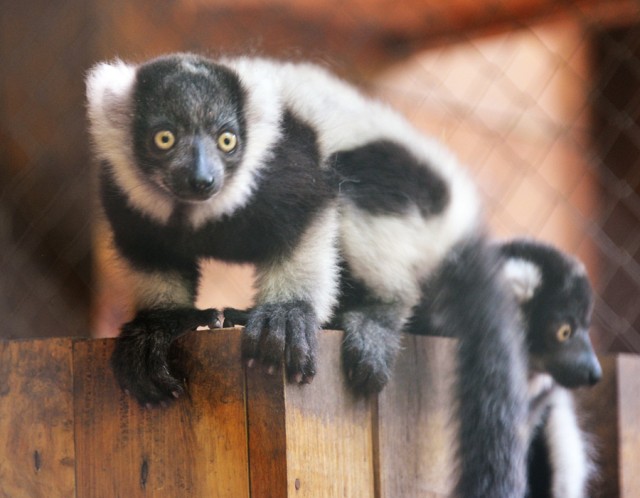
Rare, black-and-white ruffed lemurs (Varecia variegata), who are on the verge of extinction, were born in the Sóstó Zoo. The individual numbers of these animals, which are native to Madagascar, are drastically decreasing nowadays due to the poaching and the severe destruction of their living habitats, that is why it is important that zoos with serious zoological knowledge breed them in closed-keeping circumstances. The breeding individuals of Sóstó Zoo have been living together for 2 years and they were transported into the zoo via the European Species Conservation Program.
While the 16-year-old mother animal arrived from the Polish Wroclaw Zoo , the 20-year-old male arrived from the eastern-Italian Parco Natura Vivo by the recommendation of the coordinator of the species and this is their first litter.
Unlike other Lemuridae, the lemurs give birth to the undeveloped offspring in a nest built by herself after 100 days of pregnancy, the offspring aren’t carried on her body but in her mouth and they are brought up in a safe nest or a burrow so that is why the cubs couldn’t be seen so far.
However, now that the cubs became 6- week-old, they tend to spend more and more time in the enclosure and the visitors can catch a glimpse of them.
The little female cubs mostly feed on breast milk, but they start to taste the sweet, juicy fruits as well.
The black-and-white ruffed lemur (Varecia variegata) is the biggest lemur species.
Their contrasty, black and white pattern can provide them excellent cryptic coloration in the canopy of trees.
The sound signals are the most important in their communication, their specific roar is mostly heard far away.
Their special name (vari) were given by the indigenous people to these animals: they were considered as a sun-worshipper Holy animal , the Vari candanas, as they prefer to bask with their faces towards the sun.